🎉 Centenary of Linguistic Empowerment
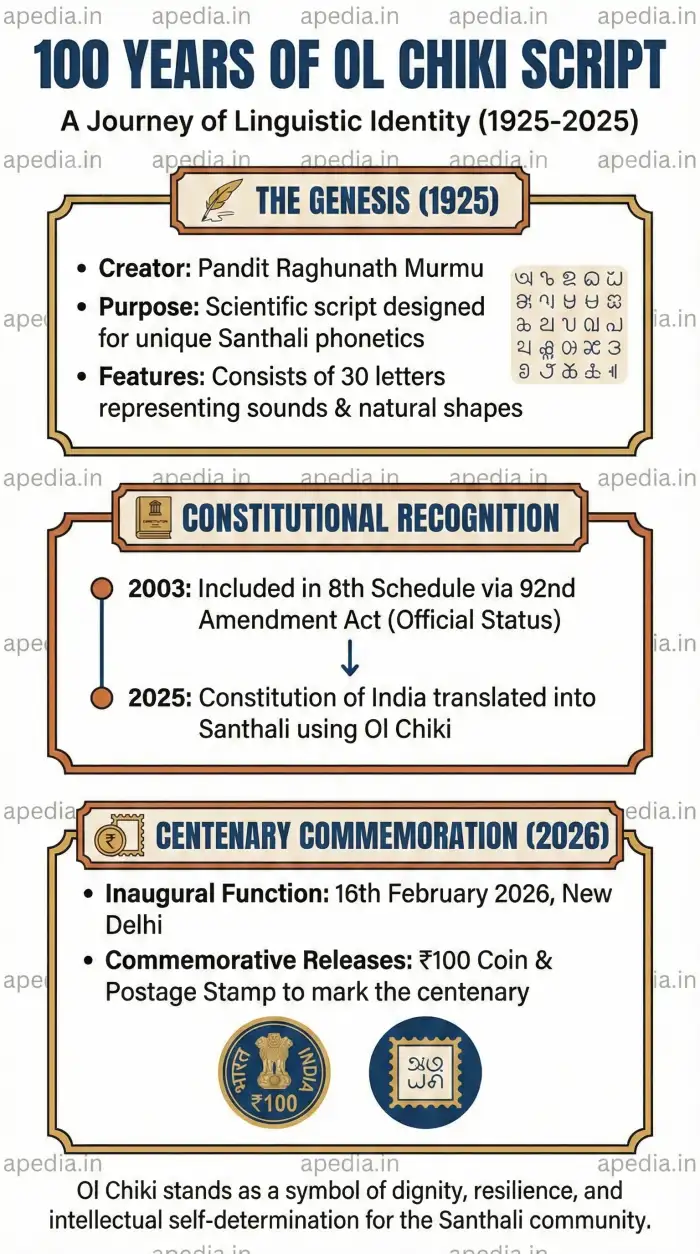
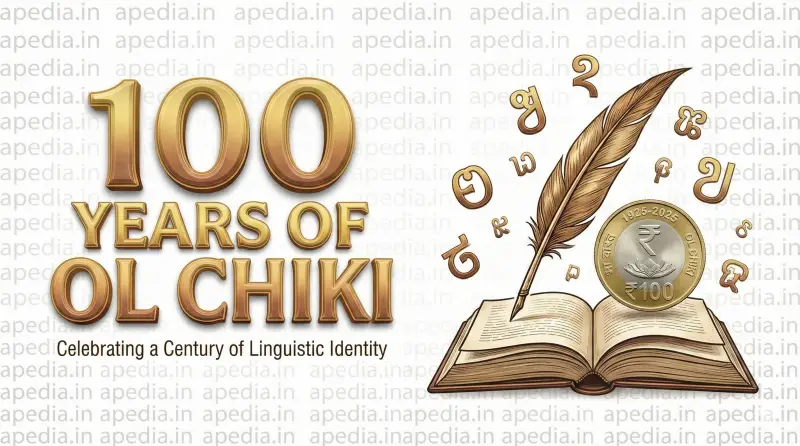
The Ministry of Culture is organizing a grand inaugural function to mark the 100th anniversary of the Ol Chiki script on 16th February 2026 in New Delhi. The event celebrates a century of literary independence for the Santhali language, transforming it from a purely oral tradition to a recognized written legacy.
1925
Year of Creation
30
Letters in Script
2003
8th Schedule Entry
📜 The Origin: Pandit Raghunath Murmu
Before 1925, Santhali was written using borrowed scripts like Roman, Bengali, Odia, and Devanagari, which failed to capture its unique phonetics (such as glottal stops). Pandit Raghunath Murmu, often called Guru Gomke, developed Ol Chiki to give the Santhali people a distinct cultural identity.
🧠 Scientific Design
The script consists of 30 letters designed to mimic the shapes of natural objects and actions relevant to Santhali life, ensuring it is easy to learn and phonetically accurate.
📚 Key Works
Pandit Murmu authored "Hor Sereng" (1936) and the play "Bidu Chandan", using the script to document folklore and emotions that were previously only oral.
🪙 Commemorative Tribute
To mark the centenary, the Govt of India is releasing a ₹100 Commemorative Coin and a Postage Stamp featuring Pandit Murmu.
🏛️ Constitutional & Legal Recognition
The journey of Ol Chiki is a testament to the resilience of indigenous knowledge systems.
- 📜 92nd Amendment (2003): Santhali was included in the Eighth Schedule of the Constitution, granting it official status alongside major Indian languages.
- ⚖️ Constitution in Santhali (2025): In a historic first, the Constitution of India was translated into Santhali using the Ol Chiki script, making legal rights accessible to the community in their own script.
- 🌏 Geographic Spread: The language is spoken across Jharkhand, Odisha, West Bengal, Assam, and Bihar, belonging to the Austroasiatic (Munda) language family.
📚 Prelims Quiz Corner
1. The 'Ol Chiki' script was developed by which of the following personalities?
Answer: B
2. Santhali language belongs to which language family?
Answer: C
📝 Mains Practice Q&A
Q. Discuss the significance of the Ol Chiki script in the preservation of Santhali identity. How does the inclusion of tribal languages in the Eighth Schedule empower indigenous communities? (GS-1: Indian Culture) - 200 Words
Model Answer Synopsis
Preservation of Identity
Ol Chiki provided a scientific method to write Santhali, which has unique sounds not found in other scripts. It allowed the transition from oral folklore to written literature, preserving cultural memory.
Significance of 8th Schedule
1. Official Recognition: Validates the language for use in education, governance, and competitive exams (like UPSC).
2. Funding & Growth: Enables state funding for literary development and translation of legal texts (e.g., Constitution in Santhali).
3. Cultural Dignity: Moves the community from marginalization to the mainstream national narrative.
2. Funding & Growth: Enables state funding for literary development and translation of legal texts (e.g., Constitution in Santhali).
3. Cultural Dignity: Moves the community from marginalization to the mainstream national narrative.
Source Information: PIB Release ID: 2228697 (Feb 16, 2026)
Link to Original Press Release
Ministry of Culture