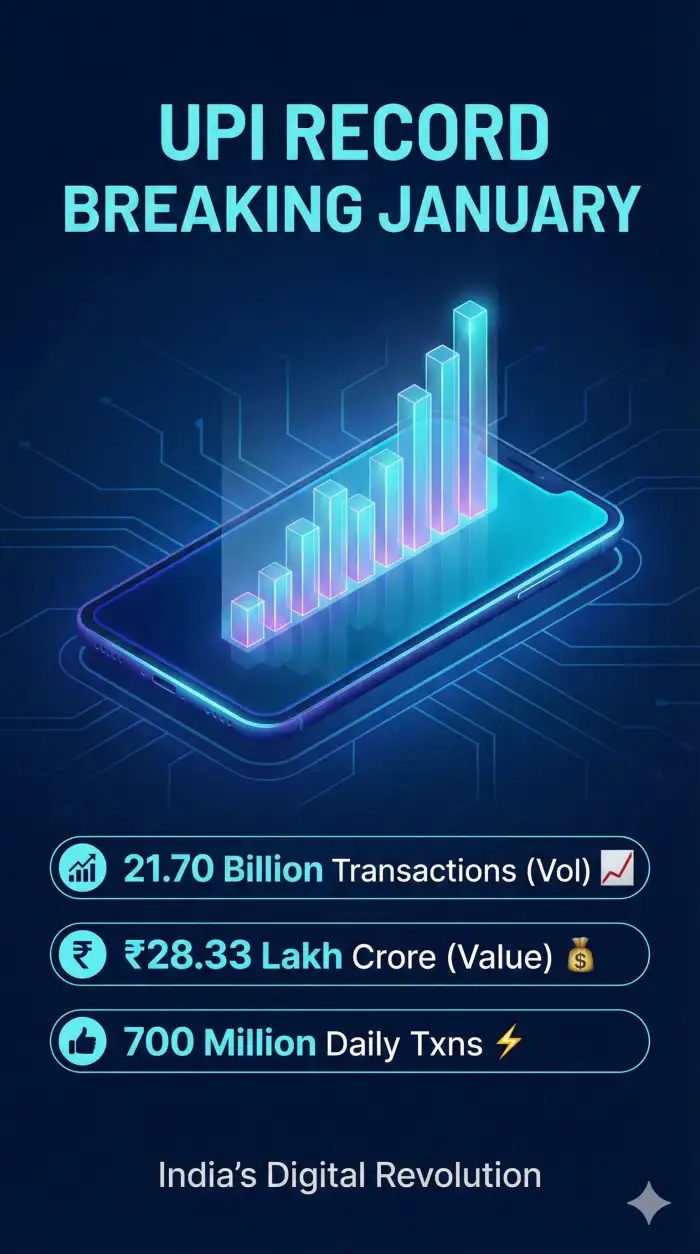
India's digital payment landscape continues to expand at a breakneck pace. According to the latest data released by the National Payments Corporation of India (NPCI) on Sunday, the Unified Payments Interface (UPI) recorded a massive 28% year-on-year jump in transaction volume for January 2026, reaching 21.70 billion. The total value of these transactions also saw significant growth, climbing 21% annually to hit ₹28.33 lakh crore, underscoring UPI's dominance as the preferred payment mode for the nation.
21.70 Billion
₹28.33 Lakh Crore
+28%
700 Million Txns
₹91,403 Crore
Scan-and-Pay is the New Default
A supporting report by Worldline India highlights a structural shift in how UPI is used. The average ticket size of transactions has decreased from ₹1,363 to ₹1,262. This drop indicates that users are increasingly relying on UPI for small-value, daily necessities—such as buying groceries at Kirana stores, paying for local transport, or purchasing healthcare essentials—rather than just large transfers.
QR Code Proliferation
The ecosystem is supported by a massive infrastructure of 709 million active UPI QR codes (as of recent data). This 21% increase since mid-2024 demonstrates deep penetration into rural markets and dense acceptance networks across pharmacies and transport hubs.
Person-to-Merchant (P2M) Dominance
The data suggests that Person-to-Merchant (P2M) transactions are outpacing Person-to-Person (P2P) transfers. While P2P remains strong, the surge in merchant transactions confirms that UPI has effectively replaced cash for retail commerce.
Comparison with IMPS
While UPI soars, the Immediate Payment Service (IMPS) also showed steady growth. In December, IMPS recorded transactions worth ₹6.62 lakh crore, marking a 10% year-on-year increase, serving as a reliable alternative for higher-value instant bank transfers.
Primary Source: DD News / NPCI Data Release
Report Referenced: Worldline India Report on Digital Payments
Read Full Report: Click Here to View Official Article