⚡ Power Capacity: 50,000 MW Milestone
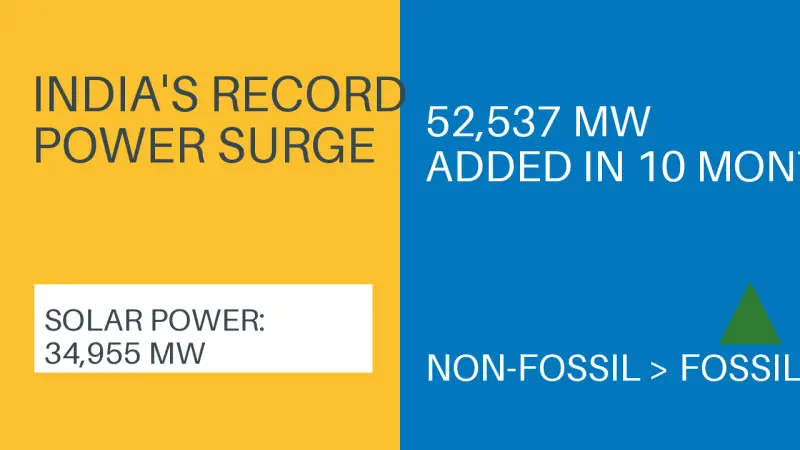
India's power sector has achieved a historic peak. In just 10 months of FY 2025-26, the nation added 52,537 MW of generation capacity—surpassing all previous annual records.
52,537 MW
New Capacity
11%
Annual Growth
520 GW
Total Installed
🌱 The Green Energy Dominance
Approximately 75% of the new capacity added this year comes from renewable sources, signaling an irreversible shift toward a green economy.
☀️ Solar Leadership
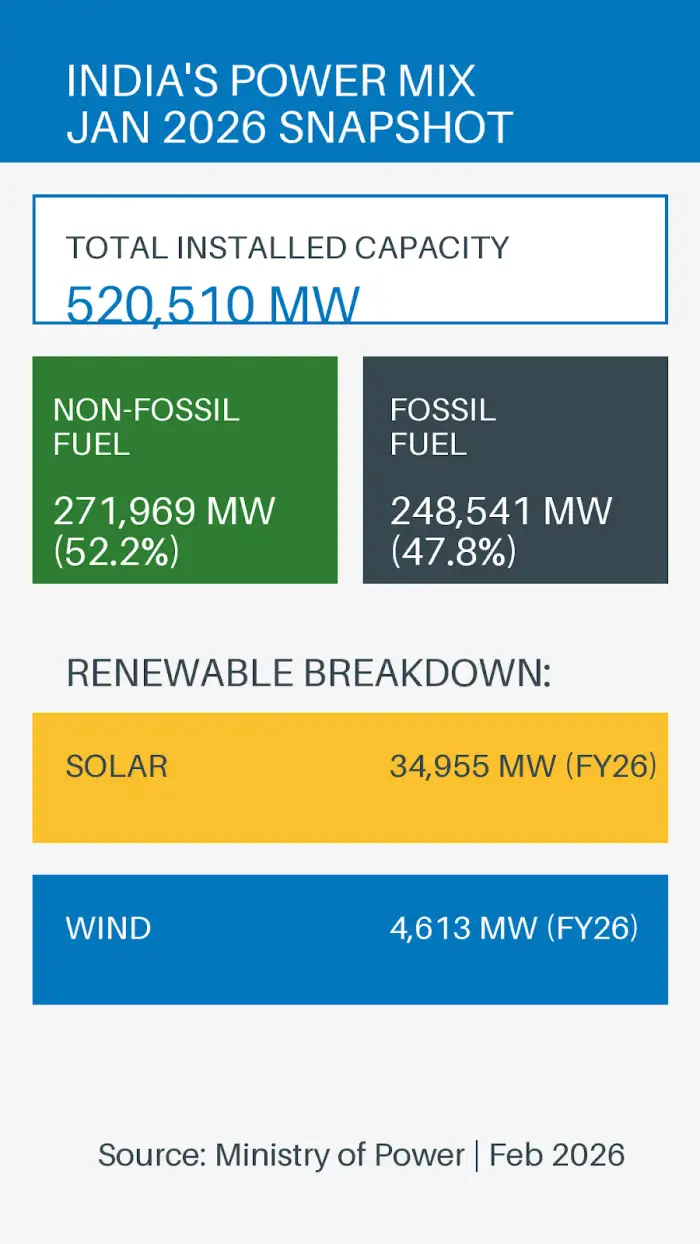
A massive 34,955 MW added, making solar the primary engine of India's energy growth.
🌬️ Wind & Others
Wind energy added 4,613 MW, while Small Hydro and Bio-power contributed the remaining balance.
🏆 New Record
Surpassed the previous record of 34,054 MW (FY 2024-25) in just 10 months.
📊 National Power Mix (Jan 2026)
| Source Type | Capacity (MW) |
|---|---|
| Non-Fossil Fuel Total | 271,969.33 |
| Fossil Fuel Total | 248,541.62 |
| Renewable Energy (RE) | 263,189.33 |
| Nuclear Power | 8,780.00 |
| GRAND TOTAL | 520,510.95 |
📝 Mains Answer Writing
Q: Discuss the implications of Non-Fossil fuel capacity surpassing Fossil fuels for India's energy security.
MODEL ANSWER (SYNOPSIS)
1. STRATEGIC SHIFT
With Non-Fossil capacity reaching 52%, India has decoupled economic growth from carbon emissions, aligning with the "Panchamrit" targets of COP26.
2. ENERGY INDEPENDENCE
Solar dominance (34GW addition) reduces the heavy reliance on coal imports, improving India's trade balance and fiscal health.
3. GRID CHALLENGES
The rapid influx of intermittent RE requires massive investment in Battery Storage (BESS) and Pumped Hydro to maintain grid stability.
4. CONCLUSION
India is no longer just a 'consumer' but a 'leader' in the global energy transition, setting a blueprint for developing nations.