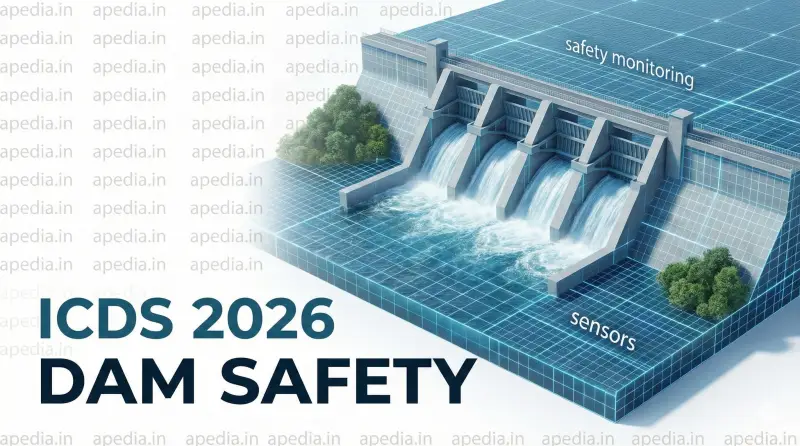
🎬 ICDS 2026: Securing India's Water Future
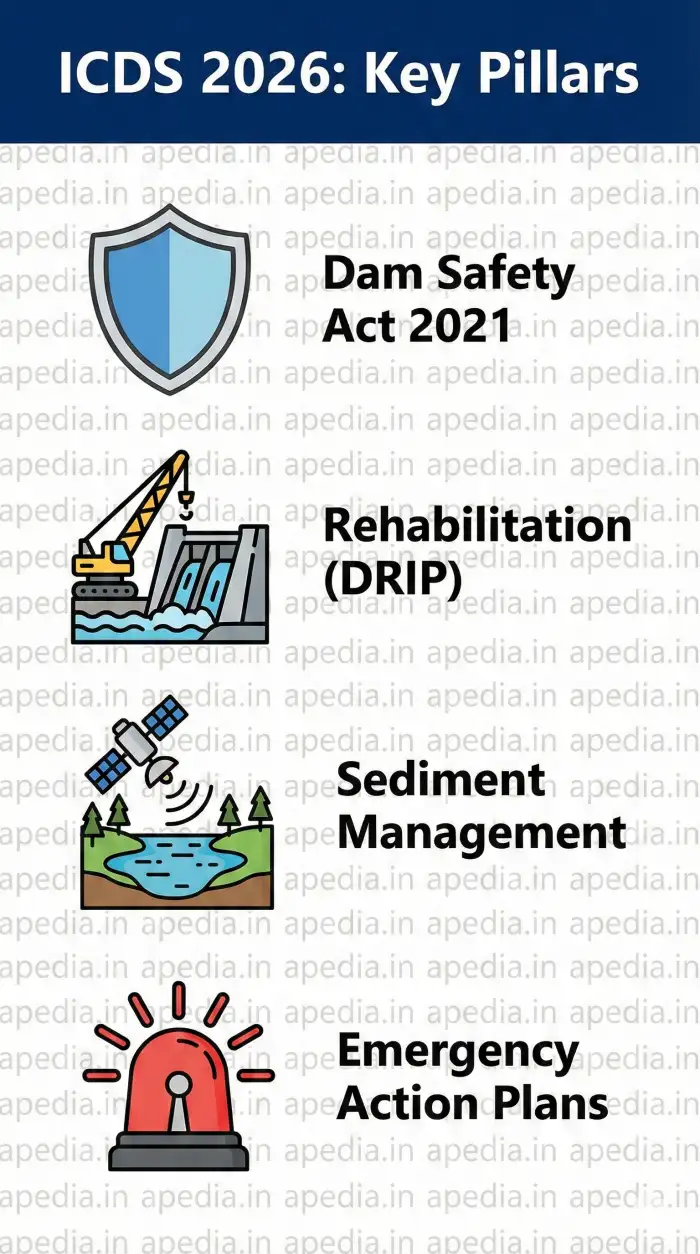
The International Conference on Dam Safety (ICDS) 2026 successfully concluded in Bengaluru. Organized by the Ministry of Jal Shakti in collaboration with the Government of Karnataka, the World Bank, and IISc, the conference set a strategic roadmap for implementing the Dam Safety Act, 2021 and advancing the Dam Rehabilitation and Improvement Project (DRIP).
85%
Dams are Earthen
2 Days
Global Deliberations
DRIP
Key Implementation Vehicle
⚙️ Key Pillars & Strategic Recommendations
The conference emphasized moving beyond routine inspections to a multidimensional approach involving risk-informed decision-making and climate resilience.
🧱 Ageing Infrastructure
With many dams exceeding their design life, the focus is on scientific rehabilitation. For the 85% earthen dams, innovative armouring solutions were recommended to prevent failure due to overtopping.
🏜️ Sediment Management
A shift from reactive to preventive sediment management was urged. Recommendations included catchment treatment, remote sensing, and revenue-neutral desilting models for commercial utilization of dredged material.
🚨 Emergency Preparedness
Strengthening Emergency Action Plans (EAPs), floodplain zoning, and inflow forecasting systems to manage floods dynamically under increasing climate variability.
📽️ Technical Sessions & Innovations
Experts from across the globe discussed advanced methodologies to ensure the longevity and safety of water infrastructure.
- 🏆 Risk-Informed Frameworks: Adoption of simplified dam-break assessment tools and hazard assessment for rapid planning across large dam portfolios.
- 🎤 Hydrological Safety: Implementation of dynamic rule curves and basin-level coordinated reservoir operations to manage flood peaks effectively.
- 🎨 Tech Integration: Use of real-time data, digital platforms, and advanced sensing technologies for monitoring dam health and distress signals.
📚 Prelims Quiz Corner
1. The International Conference on Dam Safety (ICDS) 2026 was recently held in which city?
Answer: C
2. Which act is described as a "landmark reform for accountability and governance" in India's dam safety architecture?
Answer: B
📝 Mains Practice Q&A
Q1. "A dam is a monument of public trust." In light of ageing infrastructure and climate change, discuss the challenges impacting dam safety in India. How can the Dam Safety Act, 2021 and technological interventions address these risks? (GS-3: Disaster Management) - 250 Words
Model Answer Synopsis
Introduction
Quote the significance of dams for water security and the context of ICDS 2026. Mention that a majority of India's large dams are ageing (50+ years).
Key Challenges
1. Sedimentation: Reduces storage capacity and life of reservoirs.
2. Structural Integrity: 85% are earthen dams, susceptible to overtopping during extreme weather events (climate change).
3. Operational Issues: Lack of coordinated reservoir operations leads to man-made floods.
2. Structural Integrity: 85% are earthen dams, susceptible to overtopping during extreme weather events (climate change).
3. Operational Issues: Lack of coordinated reservoir operations leads to man-made floods.
Interventions & Solutions
1. Legislative: The Dam Safety Act, 2021 mandates regular inspections and Emergency Action Plans (EAPs).
2. Technological: Use of remote sensing for sediment management, real-time monitoring sensors, and dynamic rule curves for flood control.
3. Rehabilitation: DRIP (Dam Rehabilitation and Improvement Project) focuses on structural strengthening and revenue-neutral desilting.
2. Technological: Use of remote sensing for sediment management, real-time monitoring sensors, and dynamic rule curves for flood control.
3. Rehabilitation: DRIP (Dam Rehabilitation and Improvement Project) focuses on structural strengthening and revenue-neutral desilting.
Conclusion
Shift from a "reactive" to a "risk-informed, preventive" approach is essential to ensure these "temples of modern India" remain safe and sustainable.
Source Information: PIB Release ID: 2228649 (Feb 16, 2026)
Ministry of Jal Shakti