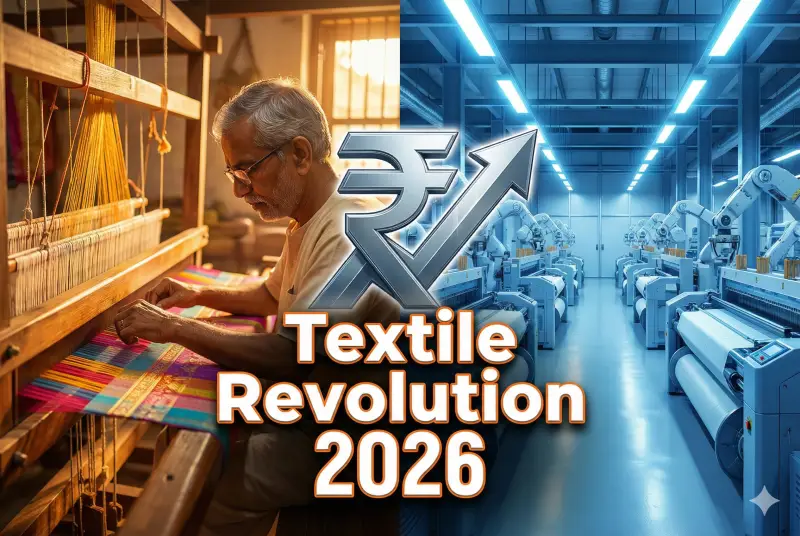
The Union Budget 2026-27 has placed the textile industry at the forefront of its employment generation strategy. Recognizing the sector's potential to drive rural livelihoods and exports, the Government has unveiled a unified policy framework. This comprehensive plan spans the entire value chain—from raw fiber production to high-fashion retail—aiming to modernize the industry while preserving India's rich heritage.
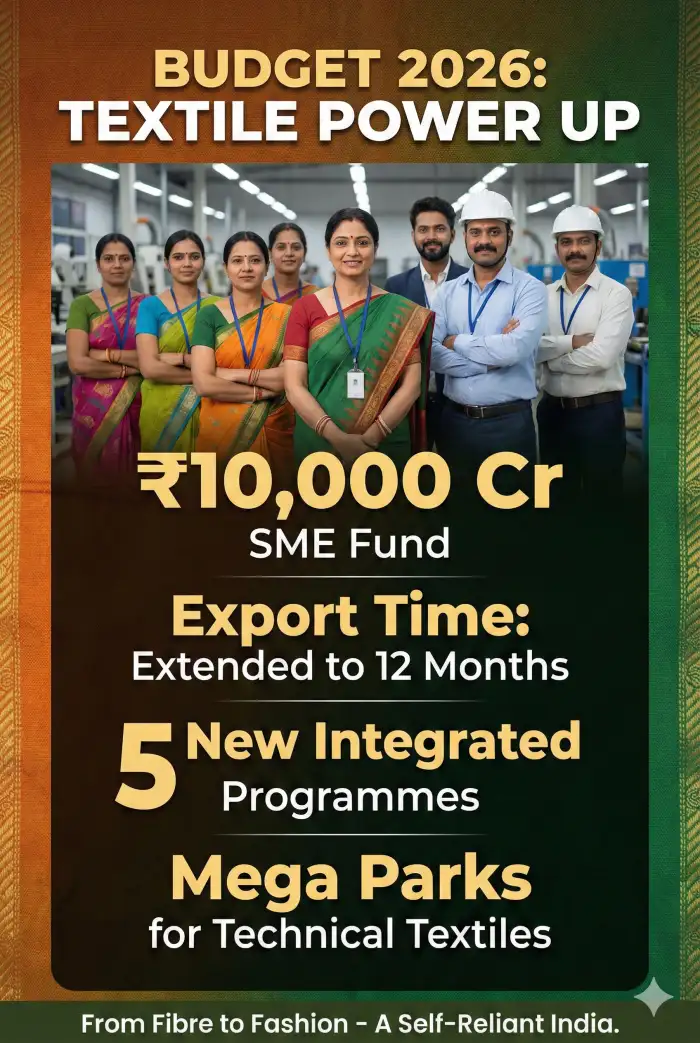
₹10,000 Crore Growth Fund
Obligation Period Extended to 12 Months
Mahatma Gandhi Gram Swaraj
Mega Textile Parks (Challenge Mode)
To foster self-reliance, the government has consolidated efforts into five strategic pillars:
- National Fibre Scheme: Focuses on reducing import reliance by boosting domestic production of silk, wool, jute, and Man-Made Fibres (MMF).
- Textile Expansion & Employment: Provides capital support for modernizing machinery and setting up certification centers to improve productivity in traditional clusters.
- National Handloom & Handicraft Programme: A unified approach to protect artisan heritage and ensure direct benefits reach weavers.
- Tex-Eco Initiative: Aligning Indian manufacturing with global green standards to tap into the eco-friendly apparel market.
- Samarth 2.0: An upgraded skilling mission connecting academia with industry needs to create a job-ready workforce.
Mega Textile Parks: The government will establish large-scale parks with integrated infrastructure, specifically targeting the high-growth Technical Textiles segment used in defense and medical fields.
Mahatma Gandhi Gram Swaraj Initiative: A new scheme dedicated to Khadi and village industries. It aims to modernize processes and link rural products to global markets, supporting the One District One Product (ODOP) vision.
Export Relief: To help exporters manage working capital better, the period to fulfill export obligations for those using duty-free inputs has been doubled from 6 months to 12 months.
TReDS & Financial Support:
- Mandatory use of the TReDS platform by Central Public Sector Enterprises (CPSEs) to pay MSMEs.
- Integration of the Government e-Marketplace (GeM) with TReDS for faster financing.
- Creation of a dedicated ₹10,000 Crore SME Growth Fund to nurture "Champion SMEs."
Information based on the official press release from the Ministry of Textiles via PIB.