💧 Understanding the Pineapple Express
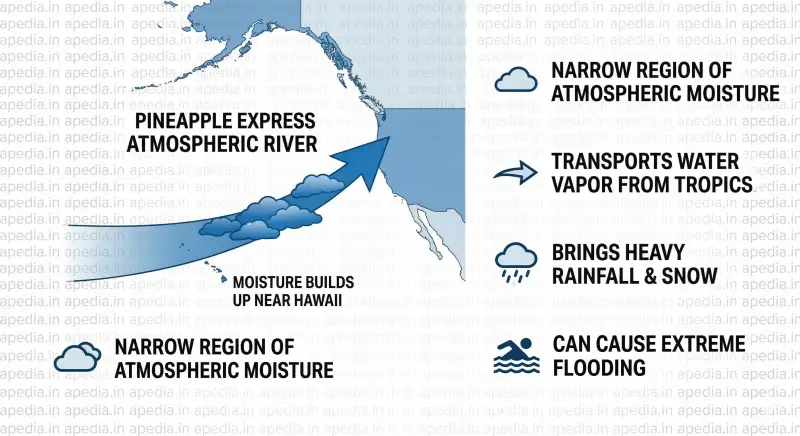
For UPSC Geography and Climatology, understanding extreme weather phenomena is crucial. The "Pineapple Express" is a famous meteorological term for a strong atmospheric river—a narrow, elongated corridor of concentrated moisture in the atmosphere. Originating in the warm, tropical Pacific waters near Hawaii, this vapor river is driven by prevailing winds toward the West Coasts of the United States and Canada. While capable of unleashing massive downpours and causing severe flooding, these systems are also integral to the global water cycle, replenishing vital water supplies and high-altitude snowpacks in western North America.
💧 Key Mechanisms & Impacts
Atmospheric rivers act as the primary horizontal transporters of water vapor outside the tropical regions, heavily influencing regional climates.
- Destructive: Strong events bring heavy, concentrated rainfall, leading to rapid flooding, property damage, and travel disruptions.
- Beneficial: Weaker or moderate events are vital for regional ecology, providing much-needed rain and high-elevation snow that secure the water supply for western communities.
📚 Prelims Quiz Corner
1. They are responsible for the majority of horizontal transport of water vapor outside of the tropics.
2. The "Pineapple Express" is an atmospheric river that originates in the Atlantic Ocean and impacts the eastern coast of North America.
3. They only cause destructive flooding and have no positive ecological or hydrological impacts.
Which of the statements given above is/are correct?
- A) 1 and 2 only
- B) 1 only
- C) 2 and 3 only
- D) 1, 2, and 3