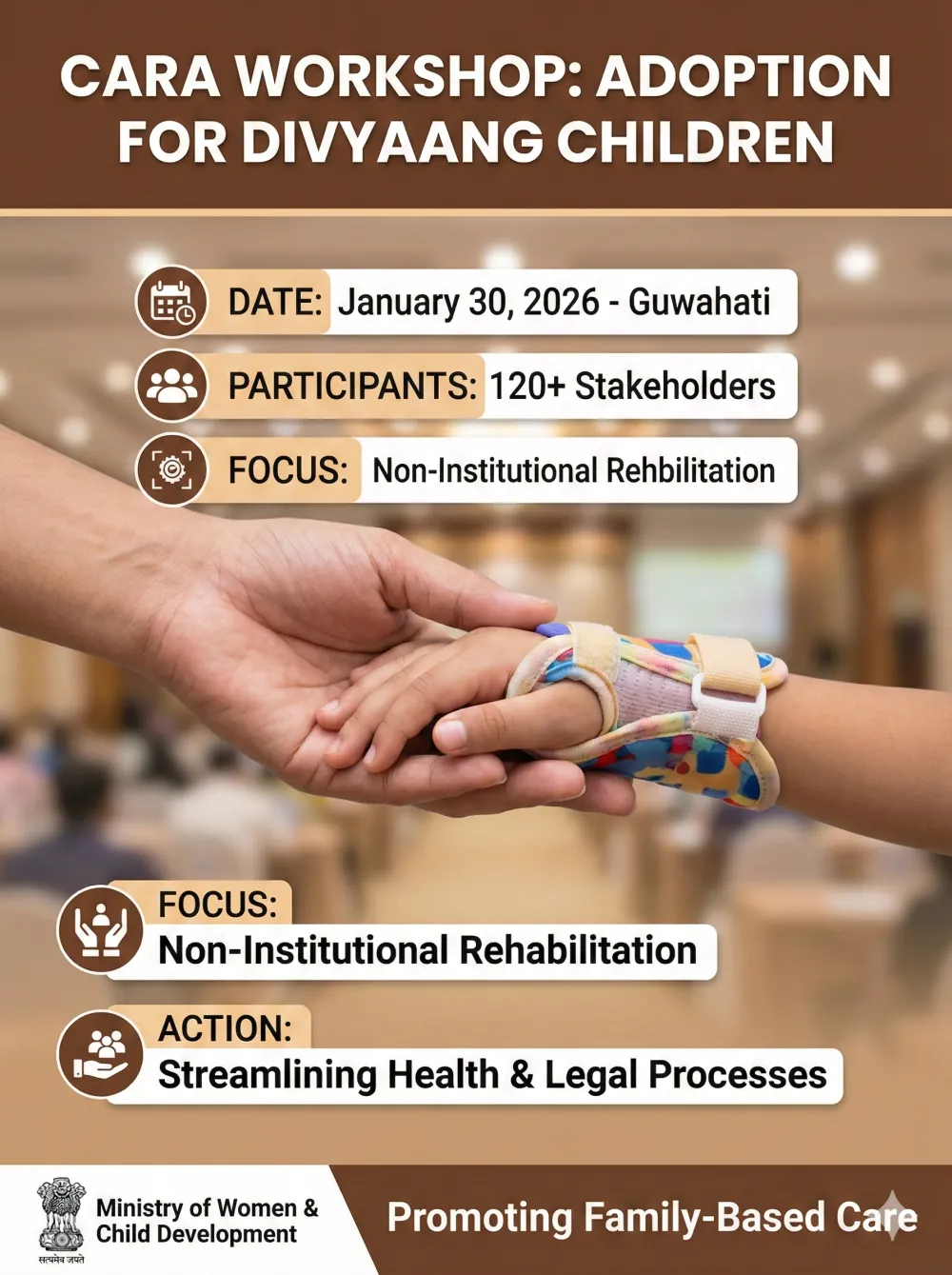
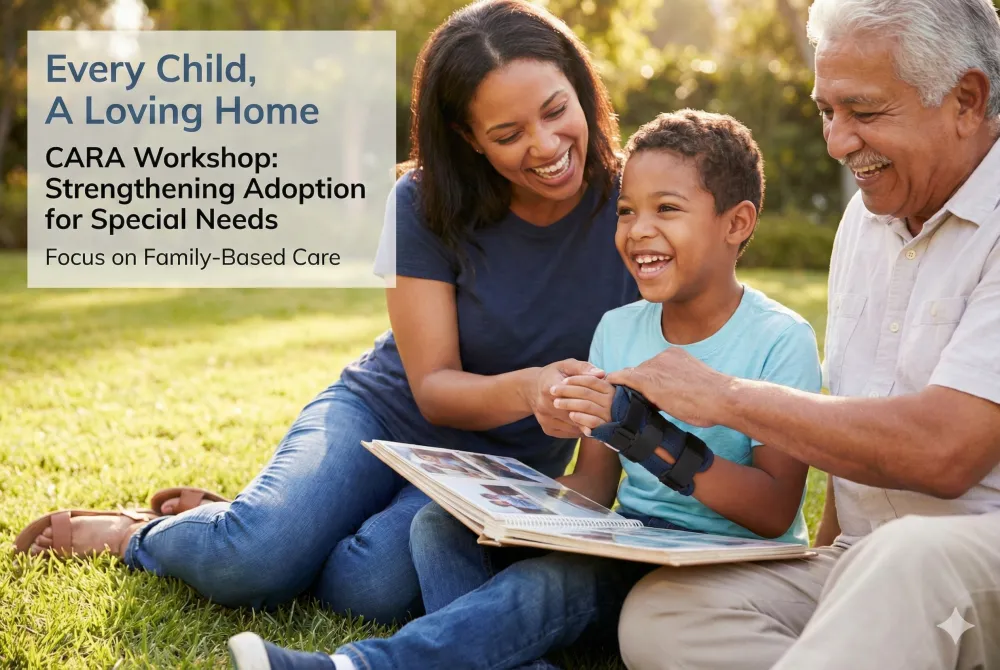
In a significant move to strengthen the social safety net for vulnerable minors, the Central Adoption Resource Authority (CARA) has launched a focused drive to promote the rehabilitation of children with special needs. Operating under the Ministry of Women and Child Development, CARA recently convened a high-level regional workshop in Guwahati, Assam. The primary objective was to shift the focus from institutional care to family-based rehabilitation for "Divyaang" children, ensuring they find nurturing homes rather than remaining in care facilities.
CARA (Ministry of WCD)
January 30, 2026
Guwahati, Assam
122 Stakeholders
Adoption of Divyaang Children
Stakeholder Convergence
The event saw a robust turnout of over 120 experts and officials. This included representatives from State Adoption Resource Agencies (SARAs), District Child Protection Units (DCPUs), and Chief Medical Officers. The gathering highlighted a unified institutional commitment to resolving the complexities involved in adopting children with special needs.
Sharing Best Practices
To inspire confidence in the adoption process, the workshop featured screenings of success stories where families have embraced children with special needs. Furthermore, representatives from various states exchanged notes on current challenges and innovative local solutions they have deployed to facilitate non-institutional care.
Core Focus Areas
Participants engaged in intensive group discussions centered on four critical pillars:
- Medical Assessment: Streamlining health checks for children with special needs.
- Legal Protocols: Simplifying the procedural aspects of adoption.
- Resource Management: Addressing financial and administrative hurdles.
- Coordination: Improving grievance redressal and inter-agency cooperation.
Actionable Outcomes
The groups produced concrete recommendations to enhance the identification and certification processes. A major emphasis was placed on counseling prospective parents to ensure they are well-informed and prepared for the journey of raising a child with special needs.
The consultation concluded with a firm resolve to draft a strategic roadmap aimed at boosting domestic adoption numbers for Divyaang children. CARA reiterated its dedication to the principle that every child, regardless of developmental or physical challenges, deserves a permanent family environment. The roadmap includes intensified efforts during Adoption Awareness Month and capacity building for frontline workers.
Information based on the official press release by the Ministry of Women and Child Development.