🚩 Nationalism
🤝 Module 1: Defining the Nation
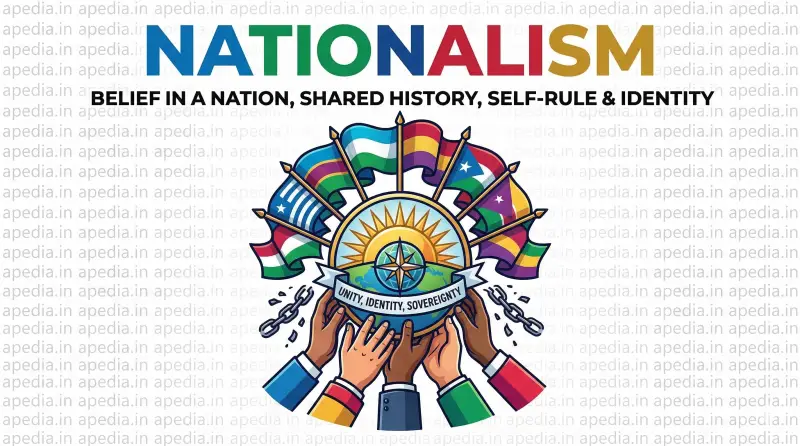
Nationalism is one of the most influential political forces in the modern world. While it can inspire deep patriotism and sacrifice, it can also be a source of intense conflict and bitterness. At its core, nationalism is centered on the concept of the nation—a group that shares a collective identity.
What Makes a Nation?
- Shared Beliefs: A nation exists primarily because its members believe they belong together. It is not just a physical group but a collective "imagined" community based on shared aspirations.
- History: Nations draw strength from a shared past, often looking back at historical events, legends, and heroes to define their identity.
- Territory: Most nations identify with a specific geographic area or "homeland" where they have lived for generations.
- Political Aspirations: Unlike a simple cultural group, a nation seeks the right to govern itself and determine its own political future.
📝 Concept Check 1
1. Is a nation primarily defined by physical proximity or collective belief?
Collective belief and shared aspirations.
2. What distinguishes a nation from other social groups?
The aspiration for political self-rule or statehood.
3. How does history contribute to national identity?
It provides a sense of continuity and shared heritage through legends and heroes.
4. What is the symbolic significance of the Republic Day parade in India?
It represents Indian nationalism, showcasing power, strength, and diversity.
⚖️ Module 2: National Self-Determination
One of the most powerful claims of nationalism is the right to national self-determination—the idea that nations should have their own independent states.
The Quest for Sovereignty
- The Goal: Nations seek to be recognized by the international community as sovereign entities, capable of making their own laws and protecting their people.
- Successes and Challenges: After World War I, this principle led to the creation of many new states in Europe. However, it also led to mass migrations and violence when borders were redrawn.
- Endless Demands: Since it is difficult to give every single ethnic or cultural group its own state, the demand for self-determination can lead to the fragmentation of existing countries.
- Pluralism: Most modern states are multi-ethnic. Instead of creating new borders, many societies now focus on granting autonomy and cultural rights to minority groups within the existing state framework.
🌟 Module 3: Nationalism and Democratic Identity
Modern nationalism works best when it is inclusive and linked to democratic values.
Inclusive vs. Exclusive Nationalism
- Democratic Identity: In a democracy, political identity should be broad enough to encompass various religions, languages, and cultures. The Indian Constitution, for example, emphasizes a secular identity that accommodates immense diversity.
- The Danger of Homogeneity: Nationalism becomes dangerous when it tries to force everyone to adopt a single language or religion. This "homogenizing" approach can lead to the oppression of minorities and social instability.
- Constitutional Safeguards: Many democracies provide special protections for religious and linguistic minorities to ensure they feel like equal members of the nation.
- Evolution: As the world becomes more globalized, nationalisms are being challenged to become more flexible and tolerant of different dimensions of a person's personality.
📝 Concept Check 2
1. What does 'national self-determination' imply?
The right of a nation to govern itself and have an independent state.
2. Why is the principle of 'one culture, one state' difficult to implement?
Because populations are highly mixed, and redrawing borders often causes violence and migration.
3. What is an alternative to creating a new state for every ethnic group?
Granting autonomy and cultural protections within a multi-ethnic state.
4. What form of identity should a democratic state promote?
An inclusive political identity that respects cultural and religious diversity.